
Small preface time: This article is the first of a series I am releasing and has a lot of overlap with my master’s thesis. If the wording seems a bit odd, that’s because it is. Without going into too much detail, self-plagiarism is a thing, and I would rather not have to deal with that. However, I am sure you will be happy with the articles. I say happy. It is depressing and annoying, but the end will be more hopeful. Maybe. And please please please remember that this series is not blaming you! You will see why at the end but, for the most part, you are not to blame.
Introduction
Tomorrow, April 22nd, is Earth day! Since 1970, every April 22nd has been marked as Earth Day, an annual day to show support for environmental activism and protection. More than ever before, conservation and environmentalism are ever-present in the minds of people around the world. The general consensus is that conservation is good, which is good. There are, unfortunately, some that disagree with this. Weird. Anyway, Conservation is good, yet the type of conservation and what is conserved are both very influential on people’s opinions. More specifically, where the money should be spent. There is always conflict between the people with the money to help and those that are trying to help. Those that disproportionally contribute to Climate change and those that disproportionally suffer its consequences. The WWF calculates that anywhere from 1,000-100,000 species go extinct every year (WWF, 2020). The higher means a species goes extinct every 5 minutes on average. So I best get on with it!

Climate change- World Leaders and Generations
First thing’s first, these decisions should be left to the scientific community and not politicians. Climate change and conservation are one and the same. They are interlinked and one cannot be solved without the other. Watching the results of COP26 come out was like punching in a dream: absolutely nothing could be done even though we knew it was not enough (UN Climate Change Conference (COP26), 2022). The politicians at this conference didn’t seem to care all that much, leading to these underwhelming results. The sad truth is that conservation and the halting of climate change goes against the interests of many politicians for the following reasons. First of all, the average age of world leaders as of 2016 was 59.8 years old (Charts Bin, 2016). Trends show that the older a person is, the less likely they are to think climate change should be combatted. In the UK, 49% of people aged 57-75 believe there is no point in changing their lifestyles to combat climate change. Among younger generations, this number is 30%. Also, the older you are, the less likely you are to think that human-caused climate change is even real. As of 2016, 47% of pre-war generations believed climate change was dangerous compared to 67% of Millennials (Climate change — Generations: Does When You’re Born Shape Who You Are?, 2022). Climate change is real and very dangerous.
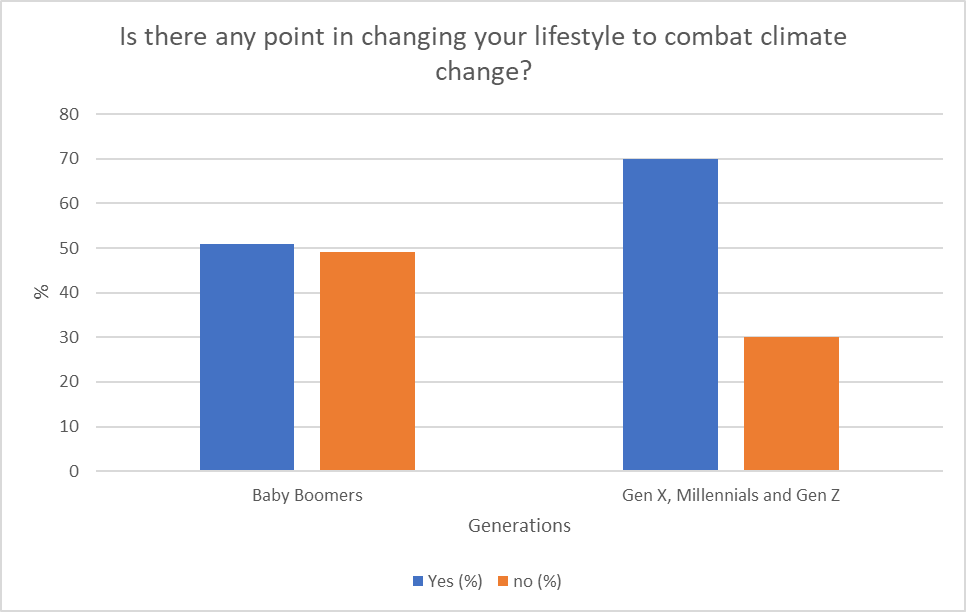
If we are to apply this to our world leaders, it indicates that half of them believe that there is no point changing their behaviour to tackle climate change because it won’t make any difference. This number could be off because they are more in the know (debatable) but also it is to be noted that world leaders are, on average, wealthier than the people they represent. The top 20 richest politicians all have well over $3 billion (Wealthy Gorilla, 2022). The top 10% of the globe have a minimum of $1 million while the top 10% of politicians are over 3,000 times wealthier than the global average. The top 1% of people by wealth produce over 35 times more emissions than the bottom 50% (Gore, 2020). Again, meaning that, on average, the politicians we elect to combat climate change are the biggest contributors to the problem and are, therefore, less likely to be in favour of systematic change as it will alter the lifestyles they have grown accustom to. So, politicians are more likely to be older and richer. Both of these factors make them far less interested in combatting climate change. Even if they wanted to, it is terrifying how few of our world leaders are actually qualified to combat this issue. Arguable the greatest issue humanity has faced. Ever.
Do you know who knows more about climate change? Climate Scientists. Do you know who are some of the most passionate advocates of fighting climate change? Climate Scientists. As of 2016, 10 world leaders had an educational background remotely related to science as a whole (Educational Background of World Leaders, 2016, Routley, 2018). In this chart, Maths and Science is the section that contains the leaders with relevant background but not all in that group do. This means that a maximum of 5% of world leaders at this time were even remotely qualified to combat climate change in terms of educational background.
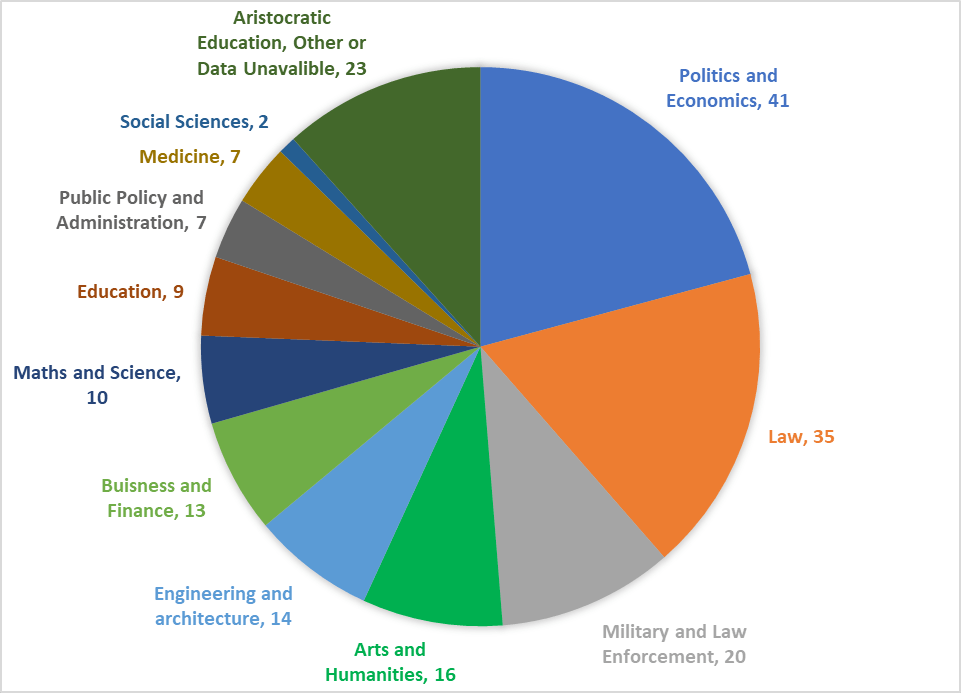
Climate change, its causes and its effects are impossibly varied, complicated and interlinked. There is a reason why entire degrees are devoted to climate science. People sometimes think getting a degree is easy. It isn’t. At all. Our politicians are less likely to believe climate change is real, are less likely to act on it and are woefully underqualified to do so. So one of the main reasons why we haven’t stopped climate change is simple: Climate change is an immensely complicated issue. This is also the reason why so many people believe human-caused climate change isn’t real. That seems easy to fix until you realise there is an entire other side to this issue. Like I mentioned in the introduction, there are people actively fighting on the side of climate change.
Small break
Hey, how are you hanging in there? Lots of information, thoughts and feelings. That last point was particularly worrying! I usually put in jokes and stuff to keeping it funny but this isn’t really a funny topic. Sorry about that. But keep with it, it gets more cheery at the end and there are even a few terrible jokes in there. However, I have to be a bit more depressing before we get there, including right now. Remember ages ago in the introduction I said that a species goes extinct every 5 minutes on average, depending on the numbers you follow? Yeah well depending on how fast you read, a species has statistically gone extinct since you started reading this. Sad isn’t it? That is probably the most depressing part of this article. Defeatism is so common and dangerous when combatting climate change. Are we in a bad situation: Yes. So much yes. Is there hope? Yes! There is hope ! There is loads you can do to help! I will be listing some of the easiest ways to help at the end. Trust me, you can make a huge difference! Now back to your regularly scheduled doom and gloom. Actually no. Here is a picture of my cat to make you feel better.

Ok now back to the doom and gloom.
The people killing our planet for Profit
As long as there is money to be made, people will do what the can to get that money. Oil and gas companies are immensely profitable and people that own them will do everything they can to keep making money. First of all, do you know when we realised climate change was happening? The idea of climate change was first pondered in the 300BCE era. We have known that Carbon Dioxide in the atmosphere can raise global temperatures, and by how much, since 1896! Exxon, one of the largest oil companies in the world, knew they were causing climate change in 1977. This same year, the last person was executed by Guillotine. An entire decade later, the public learned that climate change was happening. They didn’t admit that climate change was real until 2014. They knew it was happening and lied about it for 37 years. Pretty bad right? Oh it gets so much worse. I could write an entire book on the oil industry and how they actively spread (fake) information about climate change being not being real. Please please please read more about it. They have been lying to you and blaming you. Here are some links: Link 1, Link 2, Link 3, and link 4.
We all think about our ‘Carbon Footprints’ and how they impact the environment. Do you know who invented that phrase? BP. The oil company. To make you blame yourself instead of them. This entire section sounds like a conspiracy theory but it is all 100% true. Not to mention that oil companies have spent literally billions of dollars bribing politicians to ignore climate change and to let them keep doing their damage (Goldberg et al, 2020).
Please read more into it. This article would be hundreds of pages if I covered everything so please so some research into it.
Climate change- The rare downsides of fighting it
Depending on how it is done, conservation can sometimes do more harm than good. The type of conservation is extremely important as is it’s long term impacts on the people contributing. The method of conservation is vital in ensuring the best results win out. We cannot simply throw effort into a method of conservation, claim mission accomplished and then forget about it. I am going to use TeamTrees and TeamSeas as an example but before I do I will say this:
I am happy that these fundraisers are happening. I donated to them. The work they are doing is great but, for reasons I will get into, it could be argued they may have a long term negative impact on the work they are trying to accomplish. This section was inspired by 2 videos on YouTube which will be linked at the end of this section.
For those of you that don’t know, TeamTrees was a campaign back in 2019 by a group of YouTubers to raise $20 million to plant 20 million trees by 2020. This goal was reached and they are still accepting donations to increase this number. 20 millions sounds like a lot of trees because it is! It sounds like it must of done a lot of good and that’s because it has. As of writing, “13 MILLION+ / 23 MILLION” trees have been planted. Quick maths shows that these 13 million trees absorb a collective 325,000 tonnes of Carbon Dioxide every year, that’s 25kg per tree depending on species and a whole host of other factors (EcoTree, n.d). Importantly, this is only true once the tree is fully grown. Amazing! TeamSeas was a very similar campaign. I guess you could call it the sequel?? “TeamSeas is a global campaign to raise $30 million to remove 30 million lbs of plastic and trash from our ocean, rivers and beaches.” Again, this campaign smashed its goal and is still accepting donations!
Now how could raising so much money and planting so many trees have a negative impact? Let’s see shall we? Full disclosure, I donated to both campaigns. Just so there is no confusion.
Firstly, lets discuss the number of trees. 20 million is a huge number, but not as huge as you’d think. It is hard to get an accurate measure by the consensus is that 3.5 billion to 7 billion trees are cut down each year (Rainforest Action Network, n.d.). Lets take the exact middle of this range, 5.25 billion trees a year. 14,383,561 trees are cut down every single day. The 20 million trees this campaign aimed to plant would be enough to offset 1.3 days of deforestation. It has taken over 2 whole years to plant half these trees. Not great. Every single tree counts. Every molecule of Carbon Dioxide removed from the atmosphere is a win! It just isn’t enough, and this is where the negatives start.
As with the YouTube videos I linked below, we will assume that all the trees are planted and cared for correctly, which is extremely important. The huge issue we are left with is something called self licencing.
This is mostly subconscious so you can’t blame someone for doing it but the effects are there. Self licencing is when you do something good like donating to team trees. You have done some good and you then, subconsciously, feel like you don’t have to be as careful in the future (Sachdeva et al, 2009). Basically, “I donated to team trees, removing carbon from the atmosphere. I can drive more because It balances out.” Lets say this hypothetical person donated $20 to team trees, planting 20 trees. They will absorb a total of 500kg of Carbon dioxide per year. That is a lot. This person feels like they are more justified to drive their car to work every day instead of getting public transport because ‘their’ trees will balance it out. The average commute in the UK is 23 miles round trip (SME News, 2019). Using average carbon emissions per mile by car, his means that every year, their trees will absorb enough carbon to cancel out their commute for 98 days (Yurday, 2022). Chances are they will be working more than 98 days a year. In this situation, the psychological and practical impact of planting these trees has resulted in more carbon entering the atmosphere.
The second issue is that people see this work being done and this money being raised but have little to no context about quite how huge the issue is. TeamSeas is, unfortunately, a great example of this.
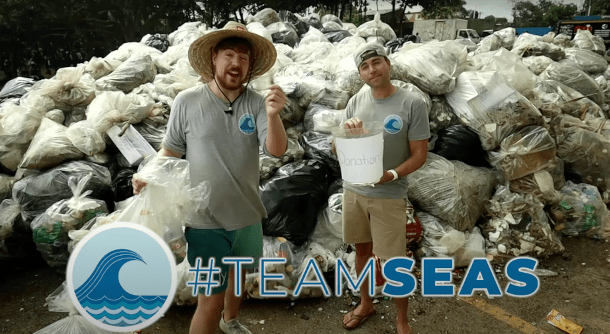
Pictures like this are all over the internet. Look at all that Plastic they Picked up! Its so much! People see this and see so much plastic removed and think the problem will be solved in no time. This picture contains 62,730 lbs of plastic and other waste removed from the beach they cleaned or 28.43 tonnes (Mark Rober’s YouTube Video)! This is incredible. As with Carbon dioxide, every molecule of plastic removed from the oceans is a win. The target of 30 million lbs is 13,607.8 tonnes. However, the data paints a much more depressing picture.
It is estimated that 269,000 tonnes of plastic was in our oceans as of 2014, made up of about 5.25 trillion individual pieces (Eriksen et al, 2014). Importantly, this doesn’t include other forms of rubbish in the world’s oceans. The pile of plastic in that picture would have to be 10,000 times bigger to remove all the plastic in the oceans as of 2014. Not only that, more than 32,876.7 tonnes of plastic is estimated to enter the oceans every single day (Jambeck et al, 2015). This number is likely much higher in 2022. Meaning the entire 30,000,000lbs of plastic removed from the ocean by this campaign would be the same amount of plastic that enters the oceans every 9 hours. It is so important to realise that this isn’t a single donation issue.
For more information and context please watch these 2 amazing videos by Dr. Simon Clark found here and here.
Conclusion
My point is that everyone should help fix the planet in any way they should but they should also be cautious of the issues I’ve mentioned. This has been very depressing but the next part will be much more positive.
I put a poll in our Facebook group, which you should join by the way, asking if you wanted this article in 1 or 2 pieces. You chose 2 so I will stop this one here and continue in the next one. There will probably be more than just 1 more. I am thinking of having articles focused on these subjects:
- What you can do without breaking the bank
- Issues with under representation in conservation
- Misconceptions and grey areas
- Answering your questions.
This article and the ones following it will probably be some of the most important things I have written to date. Please share it far and wide purely because the message needs to reach as many people as possible. Thanks,
Alex.
If you have enjoyed this site and its content please consider becoming a Patron so I can add more content in the future.
And check out what I do and where to find me here:
https://allmylinks.com/alexants

References
ChartsBin. 2016. Educational Background of World Leaders. [online] Available at: http://chartsbin.com/view/38380 [Accessed 18 April 2022].
EcoTree. n.d. How much CO2 does a tree absorb? Let’s get carbon curious!. [online] Available at: <https://ecotree.green/en/how-much-co2-does-a-tree-absorb#:~:text=A%20tree%20absorbs%20approximately%2025kg%20of%20CO2%20per%20year> [Accessed 18 April 2022].
Eriksen, M., Lebreton, L.C., Carson, H.S., Thiel, M., Moore, C.J., Borerro, J.C., Galgani, F., Ryan, P.G. and Reisser, J., 2014. Plastic pollution in the world’s oceans: more than 5 trillion plastic pieces weighing over 250,000 tons afloat at sea. PloS one, 9(12), p.e111913.
Generations: Does When You’re Born Shape Who You Are?. 2022. Climate change — Generations: Does When You’re Born Shape Who You Are?. [online] Available at: <https://generations-book.org/climate-change> [Accessed 18 April 2022].
Goldberg, M.H., Marlon, J.R., Wang, X., van der Linden, S. and Leiserowitz, A., 2020. Oil and gas companies invest in legislators that vote against the environment. Proceedings of the National Academy of Sciences, 117(10), pp.5111-5112.
Gore, T., 2020. Confronting Carbon Inequality: Putting climate justice at the heart of the COVID-19 recovery.
Jambeck, J.R., Geyer, R., Wilcox, C., Siegler, T.R., Perryman, M., Andrady, A., Narayan, R. and Law, K.L., 2015. Plastic waste inputs from land into the ocean. Science, 347(6223), pp.768-771.
Rainforest Action Network. n.d. How many trees are cut down every year? – The Understory – Rainforest Action Network. [online] Available at: <https://www.ran.org/the-understory/how_many_trees_are_cut_down_every_year/> [Accessed 18 April 2022].
Routley, N., 2018. What Did World Leaders Study at School?. [online] Visual Capitalist. Available at: <https://www.visualcapitalist.com/education-of-world-leaders/> [Accessed 18 April 2022].
Sachdeva, S., Iliev, R. and Medin, D.L., 2009. Sinning saints and saintly sinners: The paradox of moral self-regulation. Psychological science, 20(4), pp.523-528.
SME News. 2019. New survey reveals large regional differences in workers’ commuting experience – SME News. [online] Available at: <https://www.sme-news.co.uk/new-survey-reveals-large-regional-differences-in-workers-commuting-experience/> [Accessed 18 April 2022].
The age of Current World Leaders, Dadaviz Home Feed, viewed 28th December, 2015, <http://front.dadaviz.com/media/viz_images/the-age-of-our-leaders-1433749356.57-5878754.png>.
UN Climate Change Conference (COP26) at the SEC – Glasgow 2021. 2022. UN Climate Change Conference (COP26) at the SEC – Glasgow 2021. [online] Available at: <https://ukcop26.org/> [Accessed 18 April 2022].
Wealthy Gorilla. 2022. The 20 Richest Politicians in the World. [online] Available at: <https://wealthygorilla.com/richest-politicians-world/> [Accessed 18 April 2022].
WWF. 2020. How many species are we losing?. [online] Available at: <https://wwf.panda.org/discover/our_focus/biodiversity/biodiversity/> [Accessed 18 April 2022].
Yurday, E., 2022. Average CO2 Emissions per Car in the UK. [online] Nimblefins.co.uk. Available at: <https://www.nimblefins.co.uk/average-co2-emissions-car-uk#:~:text=In%20the%20UK%2C%20average%20CO2,from%20the%20Department%20for%20Transport.> [Accessed 18 April 2022].
 Alex's Ants
One thought on “Conservation, Climate , Ants and other Invertebrates- Part 1”