Recently on my lunch break at work I did what I usually spend my time doing, flipping logs and seeing what is living under them. What I found are the telling signs that flying ant day is on its way. Below I will show you the signs. If you want to know what flying ant day is all about you can read this wonderfully written article. And this one!
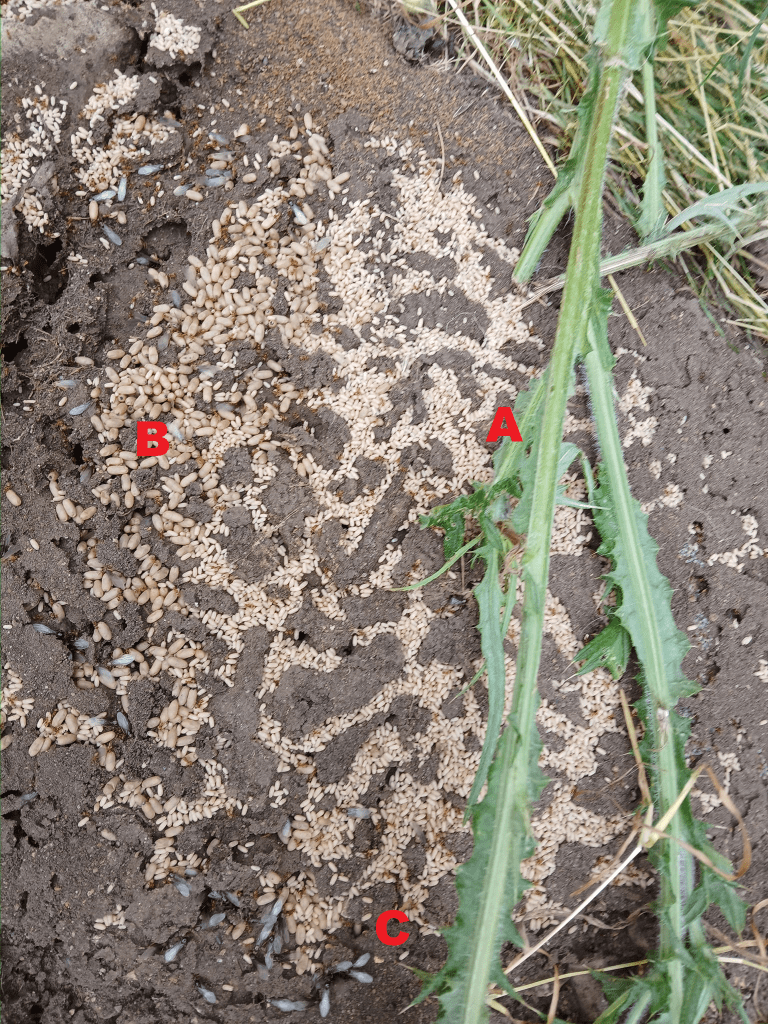
So here we see a huge Solarium of a Lasius flavus nest.
A-These are the pupae in their cocoons. These are the typical size and will contain developing workers.
B– These are much larger cocoons and will contain the developing queens that will fly during the next nuptial flight!
C– These are the virgin queens themselves! They will fly during the next nuptial flights and will, hopefully, found their own colonies.
As a rule of thumb, the presence of the larger cocoons (B) in large numbers mean the nuptial flights are coming but are not going to happen very soon. Knowing the species and the castes present in a colony are important so you know if you are looking at queens or just soldiers. Learn more about different castes here.
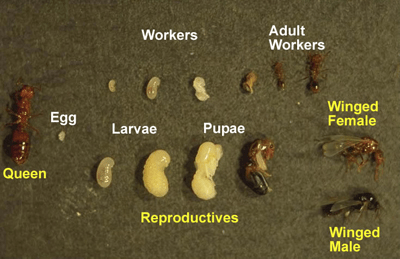
Some ant species don’t have cocoons around their pupae so will look different. A great example is shown below.
Have a look under logs, rocks and paving stones near you and see what you can find! Thanks,
Alex.
Definitions
Solarium: A part of the nest near the surface, often under logs and rocks, that benefits from sunlight to warm up the nest.
If you have enjoyed this site and its content please consider becoming a Patron so I can add more content in the future.
And check out what I do and where to find me here:
https://allmylinks.com/alexants

 Alex's Ants