It’s that time of year again where we no longer have to sit inside in the cold . Summertime is a wonderful time for life including, unsurprisingly, ants. Those of you familiar with YouTube channels such as AntsCanada probably know that people do keep ants as pets. Those of you that are not aware of this might find this very weird. However, I would argue the ants are one of the most interesting animals to keep. This post I will tell you a very basic step by step guide of how to obtain and keep your first queen Ant. The species available to you are very dependant on where you live and the time of year. For simplicity, I will be focused around the most common beginner ant species in the UK and Europe, Lasius niger.
Step 0: Knowing what you are looking for
As I am sure you all read one of my earlier articles on ant colony lifecycles I am sure I don’t need to cover this again. For those that haven’t read those I strongly recommend you read them here, here and here. Now that we are up to speed on colony lifecycles and how to identify Queens, lets get started on keeping ants as pets!
Step 1: Catching a Queen
When to Look
Lasius niger queens swarm during nuptial flights, typically from late June to early September in the UK, usually after warm, rainy weather followed by sunshine. Flights often happen in the late afternoon or early evening.
How to Spot a Queen
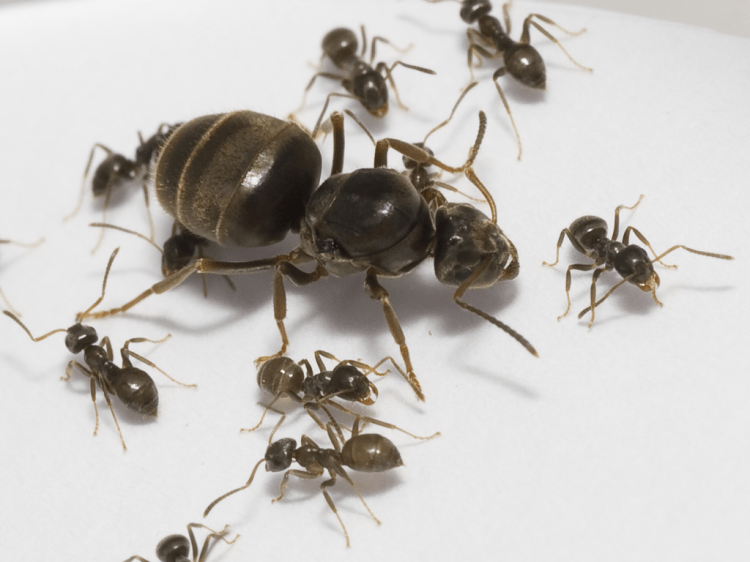
Large winged ants crawling on pavements or grass will likely be un-mated Queens and will not be suitable for starting a colony. However, wingless queens wandering alone — those are newly mated and ready to start a colony. Queens are larger than workers, usually 8–9mm long, with a noticeably stocky thorax (where wings were).
What You’ll Need
- Clean test tubes (16x150mm is ideal). Glass will be clearer but plastic is safer for young ant keepers!
- Cotton wool
- Patience and gentle hands
That’s it! Getting started with ant keeping is easy!
Step 2: Test Tube Setup
This is the standard and safest method to house your queen initially.
Basic Test Tube Setup:
- Fill 1/3 of the tube with fresh water.
- Plug the water section with a tight cotton ball — this becomes the water reservoir.
- Gently add the queen to the tube.
- Insert a dry cotton ball at the open end to seal her in.
💡 Tip: Keep the tube somewhere dark, quiet, and warm (around 21–25°C). Check sparingly — stress can cause queens to eat their own eggs!
Step 3: The Waiting Game
Over the next 2 to 6 weeks, you’ll see:
- Eggs (tiny white dots)
- Larvae (like small maggots)
- Pupae (either cocooned or naked)
- Finally, your first nanitics (worker ants)!

Don’t feed her until the first workers arrive — she’ll survive on energy stored from her wing muscles. Remember, Checking on her too often can slow this process!
Step 4: Moving to a Nest
Once the first generation is active (usually 10–20 workers), you can choose to:
- Keep them in the test tube for now (up to 50–100 workers)
- Or move them into a formicarium (ant nest) with an attached foraging area
Nest Options:
- Starter acrylic nests (great visibility) as shown in the picture above
- 3D-printed modular nests
- Ytong/Plaster nests (great humidity control)
- Or DIY it with LEGO, tubes, or old containers (get creative!)
Always attach the original test tube to the nest until they move in naturally.
Step 5: Feeding Your Colony
Lasius niger needs two main things:
- Sugars – for energy
- Honey-water mix
- Sugar-water
- Insect jelly or fruit
- Protein – for brood (larvae) development and egg production
- Dead insects (fruit flies, mealworms, crickets)
- Tiny bits of cooked egg or chicken
- Protein jelly
Feed small amounts and remove leftovers to prevent mould.
Step 6: Humidity and Heating
- Keep their nest humid but not wet. If using a test tube, the water reservoir does the job.
- Ideal temp: 20–26°C. They’ll survive at room temp but grow faster with warmth.
- Use heating cables under part of the setup (create a hot/cool gradient).
Step 7: Hibernation
In winter (usually late October to March in the UK), Lasius niger colonies slow down or stop entirely.
To hibernate:
- Place the test tube or nest in a cool (10–13°C), dark place — like a garage, shed, or wine fridge.
- Reduce feeding (they won’t eat much).
- Don’t disturb them unless checking water levels.
This rest period is natural and beneficial — it helps boost colony health long-term.
Troubleshooting & Common Questions
Q: My queen hasn’t laid eggs. What’s wrong?
A: She may be stressed. Keep her dark and avoid checking for at least a week.
Q: My workers are dying!
A: Check for mould, dehydration, or lack of food. Clean setup if needed.
Q: They won’t move into the nest.
A: That’s normal. They move only when the test tube becomes dry, mouldy, or too cramped.
Final Tips
- Label your tubes! You’ll thank yourself later.
- Join ant keeping forums or Discords for advice and ID help.
- Don’t worry if progress is slow — ants take time, and patience is key.
Why am I using Lasius niger as my example?
- Native to Europe where most of my readers are from — no ethical or legal concerns
- Extremely hardy and are so often recommended as a beginner species
- Doesn’t require heating (but benefits from it)
- Can reach colony sizes of 10,000+ in a few years!
Further reading
- Learn more about this species Alex’s Ants – Species Profile: Lasius niger
- Have you found an ant or a termite?- Ant or Termite?
- Want to Identify what ants you find? Make a start here: Poster!
Keeping ants is a unique and deeply rewarding hobby. With a bit of care and curiosity, you’ll find yourself captivated by the miniature world of your colony — one egg, one worker, one tunnel at a time.
Happy antkeeping! 🐜✨
I am trying out some new structures to these posts as you can probably tell. Let me know what you think of these changes by commenting! Thanks,
Alex.
If you have enjoyed this site and its content please consider becoming a Patron so I can add more content in the future.
And check out what I do and where to find me here:
https://allmylinks.com/alexants

 Alex's Ants